Monday, September 19, 2016


Ragnvald Blix, born in Oslo, son of E. Blix 


THE ORIGIN OF THE KING CHRISTIAN LEGEND:

THE RAGNVALD BLIX CARTOON


by professor Leo Goldberger


Ever since the popular stories of King Christian X of Denmark and the Yellow Star of David surfaced in the public consciousness throughout much of the Western world, there have been several attempts to track down its source. Such authoritative Danish historians as Ole Barfoed and Jørgen Hæstrup, among others, readily dismissed the stories as “legends”.


Even Harald Flender, an American TV writer, in his overly dramatic and somewhat flawed account made a note of the mythological nature of the story (Rescue in Denmark, W.H. Allen, 1963). An earlier, very earnest and factual first-hand account (October ’43, /Gyldendal, 1952; in English translation, Putnam, 1954) by a leading rescuer of Jews, Aage Bertelsen , was less definite on the matter of the King.

In Bertelsen’s recollection, which admittedly he could no longer substantiate when queried some 10 years later by the Israeli historian Leni Yahil, the story had been confirmed to him by the King’s own secretary, he said! (Cf. The Rescue of Danish Jewry, Jewish Publication Society, 1969, p. 443).

The search for the origin of the stories became a continuing puzzle to many authors writing about the rescue, either because of scholarly interest in the formation of legends or simply out of curiosity. While everyone agreed that as with most legends an ounce of truth was to be found in them, nevertheless the search for the causal chain in the story’s formation and subsequent spread has continued unabated to this day.


The captions read: Stauning: 
“What should we do then, your Majesty?”
The King: “Then we must all wear the Yellow Star’!


THE INITIAL MENTION OF THE LEGEND


The first exhaustive piece of research into the question of the legend’s origin was mounted by a Danish-American anthropologist, Jens Lund, and published in a relatively obscure professional journal in 1975 (Indiana Folklore, vol.8, #1-2). While The Israeli historian, Lenil Yahil, whose landmark volume on the rescue is the unquestioned classic, the credit should definitely go to Jens Lund for tracing the initial appearance of the legend’s mention in the political cartoon by the Norwegian artist Ragnvald Blix.

As he pointed out, the cartoon in question appeared for the first time in the Swedish paper Gøteborg Handels- och Sjöfartstidning (GHT) on January 10, 1942. Though Lund did not see the cartoon himself, he reported the detailed description of it, which appeared in the May 15th 1942 issue of the Danish-American newsletter, The Listening Post, a mimeographed bi-weekly, dispersed out of the office of the Danish-American businessman Caspar Hasselriis in NYC.

As already indicated, most legends (as well as simply rumors) usually have some foot in reality. In this case, the presumed facts as depicted in the cartoon was an interchange between Danish prime minister, Thorvald Stauning and the King about the eventuality that Danish Jews be required to wear the yellow star should Erik Scavenius, the more-German friendly foreign minister, become head the new government, which was increasingly insisted upon by the Germans.


Thorvald Stauning Prime Minister of Denmark.
In office 1924 - 1926. Source: Wikipedia


HISTORICAL BACKGROUND FACTORS

In recent years there appears to have been some unheralded confirmation that a conversation along the lines depicted in the cartoon actually took place. This substantiation was reported by professor Knud V. Jespersen (the royal court historian) and appears in his extensive biography of King Christian’s—in preparation for which he scrutinized some 60,000 pages of the King’s personal diaries (Cf. K.V. Jespersen, Rytterkongen: Et portræt af Christian X, Gyldendal 2007). According to Jespersen, it was Stauning’s deputy, Vilhelm Buhl -- a staunch anti-German in the ministerial cabinet who briefly succeeded Stauning’s on his death on May 3, 1942-- who brought up his concern about the potential consequence for the Danish Jews of a Scavenuis takeover.


Vilhelm Buhl Prime Minister
May 3, 1942 - 9 November 1942


In an interview about his book, Jespersen very clearly concludes that :

…the diaries reveal that the myth about the king wearing the yellow star has a certain basis in reality. In connection with the decision by the Nazis of whether all Jews were to wear a visible Star of David on their outer clothes, the King said to the acting Prime Minister, Vilhelm Buhl in 1941, it might be an idea “if we all wore the Star of David on our clothes” (cf. Kirsten Boas, “Den Complicerede Konge”, Kristlige Dagblad, Oct. 24, 2007).

This is the first confirmation of the kernel of truth in the story. The previous royal historian, Tage Kaarsted in 1990, had only maintained that “nothing in the King’s papers suggest for sure that the King ever threatened to wear the star”. But then Kaarsted did not have access to the complete set of personal diaries.

ADDITIONAL BACKGROUND FACTORS

To be sure, there were additional factors that coalesced in the timing of the cartoon, not the least of which was Denmark’s signing of the Comintern Pact in November 1941 which was quite upsetting to many Danes at home and abroad. This in turn was followed by the troublesome news of an attempted arson attack on the Synagogue on December 20, 1941 by emboldened Danish Nazis who were pushing for a ”solution to the Jewish problem” in Denmark.

What was unlikely to have been widely know, at home or abroad, was the King’s handwritten note to Rabbi Marcus Melchior a week or so later expressing his concern about the fire. However, this gesture was conflated with a number of fairly widespread stories about the king’s positive stance towards the Jewish community, not to mention the false rumor of his visit to the Synagogue, a visit that actually occurred in 1933 on the 100-year anniversary of the Copenhagen Synagogue.


THE UNIQUE SIGNIFICANCE OF RAGNVALD BLIX

After its first appearance in 1942, and following Jen Lund’s identification of its very existence, the cartoon was eventually referenced and reproduced in articles by Hans Kirchhoff, the leading contemporary Danish historian of the German occupation period and the persecution of the Jews (Kirchhoff, in Føreren har befalet, Samlern, 1993, Sofie Lene Bak, (Jødeaktionen October 1934, Museum Tusculanums, 2001, and most recently also by Bo Lidegaard, in his forthcoming book, Countrymen, Knopf, 2013 ).

They correctly note the name of Stig Höök (Blix’s Swedish pseudonym) as the cartoonist and suggest, with varying degrees of conviction, that this might have been the spark for the legend, but they seem to fail to appreciate the genuine significance of Ragnvald Blix himself (1882-1958) in getting the story off the ground, never wondering who he was and what his unique role in giving the cartoon its credibility and spread.


Even a cursory check of who he was reveals him to have been an enormously popular and influential Norwegian artist with an intensely personal motivation and mission in creating his many and varied political cartoons —and they might have finally ended their search for the originator of the royal myth that so captured our attention. It could have been none other than Ragnvald Blix! And it was created out of his need to make a political statement—after which propaganda experts who knew a valuable piece of “copy” when they saw it wisely picked it up. Caspar Hasselriis himself, in his pamphlet Denmark Fights On, which he circulated from New York along with The Listening Post, he quite cleverly juxtaposed the statement “If they have to wear the yellow star, we’ll all wear it ” against a vivid photograph of King Christian on his daily ride (Cf. T.M. Terkelsen, Front Line in Denmark, London, 1944),

Blix’s biography is too extensive to cover in this brief article (the better source is Rikke Petterson “The cartoonist who challenged Hitler”, Journal Baltic Worlds, March 2011, pp. 22-25), but let it be said he was an extraordinary person and a highly regarded artist in his day, with his works—unique caricatures of most of the well-known literati, artists and even the most sacrosanct iconic paintings of his time--still to be found housed in several Scandinavian Museums. He also left a wealth of historic books and records behind, documenting how he was regarded as a pest by the German hierarchy, both in WWI and II, by his virulent attacks on their persons and inhumane deeds.

Goering himself sent a personal appeal to the Swedish Foreign Minister urging him to ban Blix’s anti-German cartoons from further publication at the risk of damaging the relations between their 2 countries. Mussolini, Quisling and the other major fascists whom he targeted with immunity, despised him. It might also be noted that before moving on to Sweden in 1940, he had among other places in his life, lived in Copenhagen, where he worked for the largest daily, Berlingske Tidene, a paper that so worried about his political bite they fired him for fear of Nazi reprisals. (It should be noted that it was the brave Swedish editor of HST in Gøteborg, Torgney Segerstedt, who encouraged Blix’s political cartoons despite threats from the Germans and lent it much credibility!)

Blix remained in Sweden throughout the war. He established the illegal publication of Haandslaget (The Handshake), distributed by the resistance movement throughout Norway and Denmark, his cartoons being seen by millions, with the text often supplied by the Norwegian writer Torolf and the German political refugee -- none other than Willy Brandt! Indeed, Ragnvald Blix as well as Torgney Segerstedt are names to be remembered and honored for their exceptional courage!


THE SPREAD OF NEWS AND PROPAGANDA

As mentioned above, Caspar Hasselriis was clearly the key figure in spreading the story of the King and the Star of David. He was the acknowledged “soul” of the Danish-American group, which had sprung into service in late 1939 with its concern for Denmark’s welfare and reputation within the US government and public at large. The Listening Post surfaced in NY in 1941 with Hasselriis as chief.

Ship magnate Hans Isbrandtsen and other prominent Danish-Americans, such as General Motor’s president General William S. Knudsen--along with advice from the innovative spin-meister Edward Bernays, got the ball rolling by 1941. The exact role Bernays played, as a “dollar-a-year” consultant is not specified in his memoir, other than he helped establish the organization and its news and propaganda outlet, The Listening Post. While short on details, Bernays does proudly acknowledge having received King Christian’s citation and Pro-Dania Medal for his efforts. (E. L. Bernays, Biography of an idea, Simon & Schuster, 1965).

The aim of the Listening Post was to keep Americans informed about occupied Denmark, supplying readers with what sparse reliable information that was available. However, it also served as a propaganda vehicle to counteract the growing impression that Denmark was being too cooperative with the Germans. They went to great length to amplify the cruelty of the German occupiers against the Danish populace and tended to exaggerate the prevailing tenor of anti-Nazi sentiment, while exaggerating the early manifestations of active resistance in the country. In this regard, they were in close contact with the underground news and propaganda networks out of Stockholm and London’s Danish Section of the OSE, the Free Danish Council and the illegal paper “Frit Danmark”.

Needless to say, these efforts had the full support of the courageous Danish Ambassador Henrik Kaufmann in Washington and the Danish Ambassador in London. The “Listening Post” was on a seriously important mission to make Denmark look its best in an attempt to insure its potential acceptance into the United Nations as an inherently Allied nation at war’s ultimate end. And it was no mean achievement when Kaufmann, represented by Hasselriis, won full membership in the Inter Allied Council, later to become the UN Information Board (Cf. Besættelsen 1940-45: Politik, Modstand, Befrielse. Politiken Forlag, 1979].

By no means to be forgotten was the significant role played by Victor Borge, who upon his arrival in to the USA in 1940 as a penniless thirty-year old, with but a few social connections for getting a break, fairly quickly met the very hospitable and helpful Caspar Hasselriis in New York. A warm friendship between them ensued, which more than likely involved him in Hasselriis’s propaganda efforts.

Before very long, Borge’s incredible talent for “Comedy in Music” was widely recognized in the USA and his service for the Office of War Information, rallying support for Denmark and the cause of liberty became a regular feature of his entertainment platform, Though classified “4-F” by the draft board because of his age, he never tired of offering his service for the war effort. The fact that he had left family and loved one’s behind, in Denmark, including his mother's older sister who sadly enough ended up in Theresienstadt during the 1943 roundup of the Danish Jews, made his desire to fight the Nazi’s even more personal.

While living in California he signed up as a volunteer in the coastal “Evacuation Corp”, quickly earning the rank of second lieutenant, charged with helping in the evacuation of women and children in case of a Japanese’s invasion. His potential assistance was also enlisted near the end of the war by the secret mission asked of him by the U.S. War Office: to parachute into Western Jutland for the purpose of preparing the local population –among whom he would still be a recognizable celebrity –for an allied invasion, should that be planned. An amateur flyer, the unfazed Victor Borge accepted the challenge and even kept the secret from his beloved wife, Sanna, while he prepared a small suitcase in readiness.

Needless to say, his commitment to Denmark and all efforts of positive propaganda was close to his heart—and of course he never tired of telling the story of the King and the Yellow Star—in the mode of a Hans Christian Andersen tale no doubt. (Cf. Victor Borge, Smilet er den korteste afstand…, Gyldendal, 1997). As he shared the mean-spirited satire of Ragnvald Blix’s cartoons and, like Blix, was named high on the list of “the most wanted” by the Gestapo, it is not unlikely that Borge and Blix actually knew one another from the days in Copenhagen when both lived there—a fascinating further inquiry.


Author: Prof. Leo Goldberger - Professor emeritus, New York University & editor, The Rescue of the Danish Jews: Moral Courage Under Stress, NYU Press, 1987


Published by Scandinavian Jewish Forum


Tuesday, September 13, 2016


LANDET MELLAN 
ÖSTER OCH VÄSTER

1927


Marcus Ehrenpreis


Långfärden från Stockholm till Madrid verkar befriande som en sjöresa. Det kommer över en denna ljuvliga förnimmelse av frigjordhet, som förlånar färden ett eget värde, oberoende av målet. Du bor hundra timmar i järnvägsvagnen ensam och anonym, avskuren från alt och alla. Du har lämnat livets träldom, ingen och intet kan nå dig. Du har tagit bort etiketten som klistrats på din panna, du är blott och bart människa. Du har avskakat alldagens tvångströja och du kan obehindrat röra dina lemmar. Du är fri! 


Tacksamt varseblir du resans första välgärningar: ensamheten och anonymiteten. Du är ostörd med dina tankar, din själ är på besök hos dig, utan att någon obehörig stör eder samvaro. Du är okänd i en omgivning av okända en gåta bland gåtor. Livets överskådliga enformighet är borta, du kan vänta dig vilken överraskning som helst. Hemma behöver du inte ens titta i livets bok, du kan den utantill och du vet precis vad som står på nästa sida, här måste du ordentlig öppna ögonen, ty mycket är nytt och alt är annarlunda.

Här befinner du dig gentemot det obekanta i ständig spänning innfor det som nästa ögonblick kan bringa dig ett oäntlandskap, en sällsamm stadsbild eller en märkvärdig människa. Du har fått tid. Hemma lever du med klockan i handen och det är som stöde stillsyningsmannen bakom dig med sin urgamla egyptiska maning: Fullgör ditt dagsverke!” Här tillhöra dygnets tjugufyra timmar helt och hållet dig. Du kan sova eller vaka du kan tänka eller stirra ut i luften du kan tala eller tiga. Du har fått rum. Världen har blivit större vidare och rikare. Hemma ser du tillvaron blott genom fönstret i ditt arbetsrum, härute sitter du som i ett hus med glass, med fri utsikt åt alla håll och du varseblir att livet har mera än den ena sida som ligger i ditt vanliga synfält. Du ser andra världer än din gata andra manniskor än dina grannar. 


Jag tycker att man gör orätt i att i jäktande fart räsa genom världen. För min del föredrar jag att resa sakta, att stanna på vägen där jag kan möta märklga ting att dröja ibland för att känna på världens puls. Konsten att resa är till en del konstan att provosera. Just det tilfälliga och oförutssedda utgör resans stora sensation,: att i förbi farten vandra genom en obekant plats ock lyssna till dess melodi eller att bland intetsagande medresande plötsligen upptäcka en människa som man ej mera ville forlat ur sikte I järnvagsvanne erfar man något av fiskaren spännings man har kastat ut nätet och undrar vad det kan skänka.


Jag är på väg til södern til värmen till mölnfria himlar till en solbelyst jord tillförnöjsamma ock nöjda människor. Jag är ock pä väg till ett spörsmål til ett land som mera än något annat är laddat med spänningar ock motsättningar ock obegripligheter Spanien är landet mellan Öster ock Väster både genom sitt läge ock sina öden.

I norden resa sig Pyreneerna likt en igenslagen port i söder sträcker Andalusiens ökenartade landskap sina arma mot den nordafrikanska kunsten. Här ha sedan urminnes tider Orient ock Occident stämt möte. Här behärskas historia ock nutid av det på en gang tragiska ock fruktbara spänningsförhållandet mellan motsatta livsmakter. Det lockar mig i hög grad att med egna ögon få se denna levande väst-östliga syntes som föresvävar mången såsom ett allmänskligt framtidsmål, vart att eftersträvas. 

En tröstlös kulturpessimism dekreterade, att Öster och Väster äro två oförsonliga livsmakter, vilka ”aldrig skola mötas.” I Spanien hava de mötts och skapat positiva livsvärden. Här hava de framträtt både i kamp och samverkan, både skapande och förstörande. Spanien är på en gång Europa och Afrika, det är både medeltid och nutid. Det har i alla tider varit religioners och kulturens kampplats och experientalfält. Sex stora nationer byggde och bodde på denna jord och alla ländade kvar något av den egna arten.

Landets natur förenar alla klimat, från det alpinska till det tropiska. Denna jord frambringar alla produkter: vin och dadlar, bambu och bananer, paryrus, sockerrör och bomull. Klimat och historia hava här danat en människotyp, som i mångt och mycket skiljer sig från den europeiska. Framför allt en oerhört begåvad människotyp, med enoförstörbar vitalitet. 

Måhända har inget annat land frambragt så många stora män som det fattiga och hemsökta Spanien. Det interesserar mig ofantligt att komma i beröring med den spanska människan, bäraren av ett sådant mångskiftande arv, produkten av sådana klimatiska motsättningar och av en så heroisk historia. Den spanska människan är mera än någon europeisk människa både Öster och Västeland.

Hon är arier med semitisk blodblanding, katolik med muselmanska traditioner, europe med orientaliska instinkter. Spanjoren, sådan vi känna honom från litteraturen, är heroisk och grotesk, fantastisk och småaktig, han är vidhjärtad idealist och slug krämare, han er ridderlig och valdsam, romantisk och sinnelig, realist och drömmare, Don Quijote och Sancho Panza. Han är den förtrollade kungasonen, vilken Calderon i ”La Vida es sueno, (Livet är en dröm) symboliserat, ömsom fange, ömsom konung, så att han till slut inte mera kan skilja mellan verklighet och illusion.

Detta land har danat och förstört vitt skilda kulturer, andliga såväl som materiella (Es Espana) - sager Ganivet - han arrancado muchos arboles y muchas idcas”), men det har bevarat kvarlevor av alla. Det har alstrat den moriska och judiska högkulturen, Grecos och Velazquez’ djupt mänskliga konst, det fulländade dramat, ridderligheten och Don Juan romantiken, den mest brinnande katolicismen, mot reformationen, tjurfäktningen, inkvisitionen.

Det har fött Seneca, Cid Campeador och Torquemada, Averrhoes och Calderon, den heliga Teresa, Gabirol, Gongora, Maimonides, Cervantes. Det har upptäckt Amerika och Indien, det gav upphov till läran om blod cirkulationulationen. Det har skapat och förlorat det största kolonialvälde, det har - näst England - det mest utbredda språket )spanska talas av nära hundra miljoner människor).

Spanjoren är stolt over att hans land kan uppvisa ”los torreors mas valientoes las catedrales mas maravillosas, las ninas mas lindas.” (de tappraste tjurfäktarna, de underbars katedralerna, de vakraste flickorna). Vilka motsätningar på så gott som alla områden - till och med i det paradisets Andalusia - till öknar. En jord som frambringar alla europeiska trädarter och som är den trädfattigaste i världen. En sydlig himmel med en evigt lysande sol, och på samma gång en decimerad befolkning (42 människor på en kvardratkilometer, tredjedelen av det motsvaranda antalet i Italien) och en karg jordavkastning (den brukade jorden i Andalusien ger en avkastning motsvarande fjärdedelen av Bayerns)

Detta är for mig icke en turistfärd till et främmade land: Spanien är ett av mina andliga hemland, där jag i andanom tilbragt en del av min ungdom. Det judiska Spanien har för mig betytt ljus och mörker, uppsving och förnedring. Där upplevde jag den judiska andens guldålder, där umgicks jag vid Tajo och Guadalquivir med ett nytt släkte av gudsfylda psalmistet och förkunnare - de enda ljusbärarna i den mörka medeltiden. Men där led jag och med de svårt prövade religionsförföljelsens och inkvisitionens offer; jag följde med de fördrivna på den tragiska väg up i den vida världen. Jag är själslig förknippad med detta land, som på en gång drager mig och stöter mig bort.

Reser man till Spanien, så reser man i viss mån till en högskola för kulturproblem, där vi alla har något att lära. Inför den apokalyptiska sammanstötningen mellan Panasien och Paneuropa, som just i våra dagar förbereder sig, inför det lidelsefulla sökandet efter nya livsvärden, som uppfyller de bästa i vår tid, hava vi alla anledning att lyssna till det som Spanien, det mångprövade och livsstarka, det fattige och lyckliga, det förödmjukande och stolta, har att säga oss. ”Quien dice Espana dice todo,” - den som säger Spanien, han säger alt.


 Sthm: Gebers, 1927.   
Bland kapitelrubrikerna: "På väg till Madrid", "Toledo. Generationernas stad", "Tjurfäktning i Granada" och "Sommardagar i Marocko". 


Saturday, July 30, 2016


Kjell Staal Eggen (1919 - 1999) 
Photo: Courtesy Trym Staal Eggen


KJELL STAAL EGGEN


Trym Staal Eggen, tells the story of his father’s heroic efforts to rescue Jews during the Holocaust. Trym’s story is based on his father’s manuscript (Skammen) which he found in 2007, almost ten years after his father’s death. 

The manuscript was published as a book in Norway in 2008, and recently, Israel’s Holocaust center Yad Vashem has decided to publish the book.


As I said, I have known very few Jews. However, there is one Jewish man I have known all my life. Being a small child, I used to call him ”uncle”, like so many other friends of my parents – they were all ”uncles” and ”aunts”. My Jewish”uncle” has a Norwegian given name and a typical German family name. He was born in the Norwegian capital, Oslo, in 1924. His parents were Scandinavian-born Jews, his father born in Norway and his mother in Sweden. He does not practice Judaism, or any other religion.

One day, when I was maybe five years old, in the 1960s, I was together with my father in ”uncle” Sigurd’s shop in Skien. Skien is the main town of Telemark county, some 150 kilometers (100 miles) from Oslo on the southeast coast of Norway. On the wall inside his office there was a portrait painting of a male person. When my father and I were alone for a moment, I asked who the man on the picture was. “That is Sigurd’s father,” was the answer. “And where is he?” I wanted to know. Then I was told that Sigurd’s father was dead. “What happened to him then?” “The Germans killed him.” “Why?” I asked. “Because he was a Jew,” was the answer that left me speechless and literally ended the conversation. That answer was incomprehensible to me at that time, and it still is. That short conversation still rings in my ears, more than 40 years later.

As time went on and I grew up, I was to gradually learn the full story about Sigurd, his little brother, his little sister, his parents, his uncle and other relatives, and how they were victims of one of the greatest crimes in human history – the Holocaust, Adolf Hitler’s “The final solution” of the Jewish question. And, how much I hate to say it, their story also includes elements that are nothing short of a national shame. Sigurd’s father, who founded the shop Sigurd would take over after the war was, with his younger brother was murdered in Auschwitz. His wife and three children were miraculously rescued. 

This family of six people were the only known representatives of the “Jewish problem” in the county of Telemark. As I would find out, my father had a central part in the survival of the four lucky members of the family – something we are immensely proud of. And the story is ugly to the grotesque, although it has a happy ending for four of the family members – Sigurd, his little brother and little sister are all still alive today. The story is ugly not only because Sigurd’s father and uncle both perished in Holocaust but also because supposedly “good” Norwegians gave the Nazis a helping hand in the horrors.

In Norway, we have mostly been taught the story of Jews being harassed and persecuted by the German occupants, somewhat aided by Norwegian Nazis, while everybody else did their best to help. That is what we are mostly told, in writing and in museums, even in school. Wouldn't it be nice had that been the entire truth?

Yes, that would definitely be nice. But unfortunately, the picture is not quite that black and white. Although there are many examples of good deeds and heroic efforts, there are also stories I wish were not true. For example, in May 1940, while the outdated, long-time neglected, under-equipped and under-maintained Norwegian military forces were still at war against the overwhelmingly superior power of the invaders, the Germans asked the police in Oslo for lists of radio receivers in Jewish homes. 

Without any attempt of sabotaging the request, it took just hours for the chief of police in Oslo to produce and hand over meticulously compiled lists. Shortly after and with no legal right to do so, Norwegian police knocked on the doors of the same homes and confiscated all respective radios. The radios were then handed over to the German occupants.

Later on, in the autumn of 1942, the situation would become much more serious. When all Jews were to be arrested and deported to Auschwitz, it was Norwegian police that carried out the brunt of the arrests. The 1958 Norwegian movie “I slik en natt” (“In such a night”) things were presented differently. The film shows uniformed German military personnel doing all the dirty work.

It should be mentioned that there were many good people in the police who tried their best to warn the victims about what was going to happen. My “uncle” was given a warning by such a police officer. The policeman could not stop what was coming, but he did what he should do despite great personal risk. Also, my mother, who is from Oslo, remembers people from the Norwegian resistance rushing into her classroom, picking up a Jewish girl in the class and running away with her. This girl, Erna, came to Sweden along with her mother and other family members. After the war she was reunited with her class. Erna’s father however, was murdered in the death camps.

When it comes to “uncle” Sigurd and his family, their sad story is extremely controversial and has aspects we would like not to tell, aspects we would not even like to imagine. But, for history to be told truthfully, it has to be told. 

In the autumn of 1942, as the persecution of Jews escalated and culminated, Sigurd was saved by the mentioned policeman who warned him about his imminent arrest, and told him to get into immediate hiding. Sigurd’s mother then handed her son into the custody of a couple of resistance fighters in the town of Skien. These two resistance fighters were Kjell Batzer (1906-1966) and Kjell Staal Eggen (1919-1999), the latter being my father. 

But when these two resistance fighters approached the regional leadership of the main national resistance organisation Milorg, they received the most shocking reply: “Kick him out in the street and let the Germans take over! This case has no interest to a military organisation!” My father would later sourly comment: “I would later find out that the so-called “military organisation” at that time still had not acquired as much as a toy pistol to liberate the country.” Later on, after the regional leadership of Milorg had been replaced with people my father respected in the summer of 1943, my father reluctantly accepted to be engaged as leader in the resistance. He was responsible for sabotage and airdrops in southern Telemark, thus being instrumental in supplies of arms and equipment to Milorg.

The rescuers improvised an impressive and amazing apparatus. Sigurd was placed on an extra bed in the bedroom of one of the two rescuers – my father – in the apartment of my grandparents. As the apartment was right in the center of town and also housed the medical office of my grandfather, the boy was instructed never to leave the room and stay far away from the window. The rescuers made big efforts to find help to evacuate the young refugee.

My father was “editor” of one of the larger illegal newspapers in the region. The “edition” used to be contacted by various representatives of organizations who wanted paroles and messages printed. Now the same representatives were contacted with pleas for help. One of them was a well-known politician who self-importantly presented himself as the regional representative for the exiled government in London. Nobody could help. They either showed a total lack of interest, or they appeared to be embarrassed to admit that they were unable to help. Even the “regional representative of the legal government” had no ace up his sleeve.

Travelling was difficult, as the occupants had imposed strict restrictions. Still, long trips were made to various towns and places, in hope of getting in touch with any organization that could help. Among all the travelling activities, my father made two trips to Oslo, staying several days each time, trawling through addresses on a memorized list. It was all in vain – nobody showed any interest or ability to do anything about this local “Jewish problem”. There was one single exception: on the last Oslo trip my father met one man who showed a ray of hope – a book dealer who was connected with the organizers of an escape route that was momentarily suspended, but that might get active again.

After the rescuers had struggled for about one month to evacuate just one teenager, the police then decided to arrest Sigurd’s mother and little siblings. Dramatically, the rescuers succeeded in picking them all up right under the nose of Norwegian police trying to arrest them. This started a new era of the rescue operation. As if the rescuers did not have enough with one refugee, they now found themselves with four. Secret shelters had to be found – Sigurd had to be moved as there was a risk that his hiding in my father’s bedroom had been discovered.

Another month passed with fruitless efforts. Out of despair, new advances were made towards the regional Milorg leadership. Milorg remained merciless. When new approaches were made, the answer was like before: “Kick them out in the street, let the Germans take over!”

The whole matter was eventually solved under dramatic and improvised circumstances. The four family members were smuggled out of the country in the cargo of a Swedish freight vessel. The captain of the vessel can in no way be said to have acted on idealistic motives. He asked an outrageous price for the crossing, corresponding with years of average salaries at the time. The captain had to be threatened at gunpoint by my father in order to reach an “agreement”.

On top of all the grief already mentioned, it was found out around 1980 that the family’s economic possessions had been stolen – by nobody else than Milorg. The very organization that insistently had refused to help the family to escape had confiscated it all. Being fully aware that other resistance fighters were in a desperate and lonely struggle to save the family and could have made good use of the money, did not seem to bother Milorg. 

Mr David Becker, Sigurd’s father, who used to give financial aid to Milorg up till his arrest on June 2nd 1942, had over the last few years put aside money in case of crises like what they now faced. Not until 1981, after the press had brought up the case, the Norwegian government recognized a certain responsibility and paid a symbolic but not adequate compensation to the family.


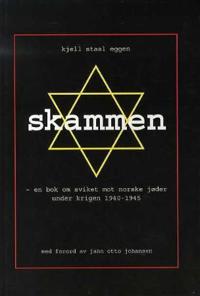
Skammen


This grotesque story is laid out in detail in my father’s posthumous publication “Skammen” (“The Shame”) published in 2008. The book is based on a complete script written in the early 1990s, which I stumbled over while browsing through a box containing some of the papers my father left behind. The script was totally unknown to all of us. There is also correspondence showing that my father made approaches to a couple of well-known publishers in order to have the story published. The same correspondence says that the manuscript, “although very interesting, is probably a bit too special to be published in Norway today.


Sigurd Becker 


” It is also well known that “the establishment” made significant efforts going out of their way to silence my father as he started speaking out about his experiences about 30 years ago. “Uncle” Sigurd has contributed an epilogue to the book. Sigurd and his siblings are all alive today. Still, more than a dozen years after my father’s passing, Sigurd knocks on my mother’s door at Christmas time every year and puts a gift on the table. I still call him “uncle”.


Yad Vashem has awarded the title of "Righteous Among the Nations" post mortem to Kjell Staal Eggen and his parents Staal Olaf and Anna Christiane Eggen for saving the lives of The Becker family during the Holocaust.


Friday, July 29, 2016


Ragnvald Blix (1882 - 1958) 


THE ORIGIN OF
THE KING CHRISTIAN LEGEND:
THE RAGNVALD BLIX CARTOON

                                                         
 by professor Leo Goldberger


Ever since the popular stories of King Christian X of Denmark and the Yellow Star of David surfaced in the public consciousness throughout much of the Western world, there have been several attempts to track down its source. Such authoritative Danish historians as Ole Barfoed and Jørgen Hæstrup, among others, readily dismissed the stories as “legends”.

Even Harald Flender, an American TV writer, in his overly dramatic and somewhat flawed account made a note of the mythological nature of the story (Rescue in Denmark, W.H. Allen, 1963). An earlier, very earnest and factual first-hand account (October ’43, /Gyldendal, 1952; in English translation, Putnam, 1954) by a leading rescuer of Jews, Aage Bertelsen , was less definite on the matter of the King. 

In Bertelsen’s recollection, which admittedly he could no longer substantiate when queried some 10 years later by the Israeli historian Leni Yahil, the story had been confirmed to him by the King’s own secretary, he said! (Cf. The Rescue of Danish Jewry, Jewish Publication Society, 1969, p. 443). 

The search for the origin of the stories became a continuing puzzle to many authors writing about the rescue, either because of scholarly interest in the formation of legends or simply out of curiosity. While everyone agreed that as with most legends an ounce of truth was to be found in them, nevertheless the search for the causal chain in the story’s formation and subsequent spread has continued unabated to this day.


THE INITIAL MENTION OF THE LEGEND


The first exhaustive piece of research into the question of the legend’s origin was mounted by a Danish-American anthropologist, Jens Lund, and published in a relatively obscure professional journal in 1975 (Indiana Folklore, vol.8, #1-2). While The Israeli historian, Lenil Yahil, whose landmark volume on the rescue is the unquestioned classic, the credit should definitely go to Jens Lund for tracing the initial appearance of the legend’s mention in the political cartoon by the Norwegian artist Ragnvald Blix.

As he pointed out, the cartoon in question appeared for the first time in the Swedish paper Gøteborg Handels- och Sjöfartstidning (GHT) on January 10, 1942. Though Lund did not see the cartoon himself, he reported the detailed description of it, which appeared in the May 15th 1942 issue of the Danish-American newsletter, The Listening Post, a mimeographed bi-weekly, dispersed out of the office of the Danish-American businessman Caspar Hasselriis in NYC.


As already indicated, most legends (as well as simply rumors) usually have some foot in reality. In this case, the presumed facts as depicted in the cartoon was an interchange between Danish prime minister, Thorvald Stauning and the King about the eventuality that Danish Jews be required to wear the yellow star should Erik Scavenius, the more-German friendly foreign minister, become head the new government, which was increasingly insisted upon by the Germans.

The captions read: 
Stauning: “What should we do then, your Majesty?” 
The King: “Then we must all wear the Yellow Star!" 


Thorvald Stauning Prime Minister of 
Denmark. In office 1924 - 1926. 
Source Wikipedia


HISTORICAL BACKGROUND FACTORS


In recent years there appears to have been some unheralded confirmation that a conversation along the lines depicted in the cartoon actually took place. This substantiation was reported by professor Knud V. Jespersen (the royal court historian) and appears in his extensive biography of King Christian’s—in preparation for which he scrutinized some 60,000 pages of the King’s personal diaries (Cf. K.V. Jespersen, Rytterkongen: Et portræt af Christian X, Gyldendal 2007). According to Jespersen, it was Stauning’s deputy, Vilhelm Buhl -- a staunch anti-German in the ministerial cabinet who briefly succeeded Stauning’s on his death on May 3, 1942-- who brought up his concern about the potential consequence for the Danish Jews of a Scavenuis takeover.


In an interview about his book, Jespersen very clearly concludes that :

…the diaries reveal that the myth about the king wearing the yellow star has a certain basis in reality. In connection with the decision by the Nazis of whether all Jews were to wear a visible Star of David on their outer clothes, the King said to the acting Prime Minister, Vilhelm Buhl in 1941, it might be an idea “if we all wore the Star of David on our clothes” (cf. Kirsten Boas, “Den Complicerede Konge”, Kristlige Dagblad, Oct. 24, 2007). 
This is the first confirmation of the kernel of truth in the story. The previous royal historian, Tage Kaarsted in 1990, had only maintained that “nothing in the King’s papers suggest for sure that the King ever threatened to wear the star”. But then Kaarsted did not have access to the complete set of personal diaries. 


Vilhelm Buhl Prime Minister 
May 3, 1942 - 9 November 1942


ADDITIONAL BACKGROUND FACTORS


To be sure, there were additional factors that coalesced in the timing of the cartoon, not the least of which was Denmark’s signing of the Comintern Pact in November 1941 which was quite upsetting to many Danes at home and abroad. This in turn was followed by the troublesome news of an attempted arson attack on the Synagogue on December 20, 1941 by emboldened Danish Nazis who were pushing for a ”solution to the Jewish problem” in Denmark. 


What was unlikely to have been widely know, at home or abroad, was the King’s handwritten note to Rabbi Marcus Melchior a week or so later expressing his concern about the fire. However, this gesture was conflated with a number of fairly widespread stories about the king’s positive stance towards the Jewish community, not to mention the false rumor of his visit to the Synagogue, a visit that actually occurred in 1933 on the 100-year anniversary of the Copenhagen Synagogue.


THE UNIQUE SIGNIFICANCE OF RAGNVALD BLIX


After its first appearance in 1942, and following Jen Lund’s identification of its very existence, the cartoon was eventually referenced and reproduced in articles by Hans Kirchhoff, the leading contemporary Danish historian of the German occupation period and the persecution of the Jews (Kirchhoff, in Føreren har befalet, Samlern, 1993, Sofie Lene Bak, (Jødeaktionen October 1934, Museum Tusculanums, 2001, and most recently also by Bo Lidegaard, in his forthcoming book, Countrymen, Knopf, 2013 ). 


They correctly note the name of Stig Höök (Blix’s Swedish pseudonym) as the cartoonist and suggest, with varying degrees of conviction, that this might have been the spark for the legend, but they seem to fail to appreciate the genuine significance of Ragnvald Blix himself (1882-1958) in getting the story off the ground, never wondering who he was and what his unique role in giving the cartoon its credibility and spread.


Even a cursory check of who he was reveals him to have been an enormously popular and influential Norwegian artist with an intensely personal motivation and mission in creating his many and varied political cartoons —and they might have finally ended their search for the originator of the royal myth that so captured our attention. 

It could have been none other than Ragnvald Blix! And it was created out of his need to make a political statement—after which propaganda experts who knew a valuable piece of “copy” when they saw it wisely picked it up. Caspar Hasselriis himself, in his pamphlet Denmark Fights On, which he circulated from New York along with The Listening Post, he quite cleverly juxtaposed the statement “If they have to wear the yellow star, we’ll all wear it ” against a vivid photograph of King Christian on his daily ride (Cf. T.M. Terkelsen, Front Line in Denmark, London, 1944).

Blix’s biography is too extensive to cover in this brief article (the better source is Rikke Petterson “The cartoonist who challenged Hitler”, Journal Baltic Worlds, March 2011, pp. 22-25), but let it be said he was an extraordinary person and a highly regarded artist in his day, with his works—unique caricatures of most of the well-known literati, artists and even the most sacrosanct iconic paintings of his time--still to be found housed in several Scandinavian Museums. He also left a wealth of historic books and records behind, documenting how he was regarded as a pest by the German hierarchy, both in WWI and II, by his virulent attacks on their persons and inhumane deeds. 

Goering himself sent a personal appeal to the Swedish Foreign Minister urging him to ban Blix’s anti-German cartoons from further publication at the risk of damaging the relations between their 2 countries. Mussolini, Quisling and the other major fascists whom he targeted with immunity, despised him. 

It might also be noted that before moving on to Sweden in 1940, he had among other places in his life, lived in Copenhagen, where he worked for the largest daily, Berlingske Tidene, a paper that so worried about his political bite they fired him for fear of Nazi reprisals. (It should be noted that it was the brave Swedish editor of HST in Gøteborg, Torgney Segerstedt, who encouraged Blix’s political cartoons despite threats from the Germans and lent it much credibility!) 

Blix remained in Sweden throughout the war. He established the illegal publication of Haandslaget (The Handshake), distributed by the resistance movement throughout Norway and Denmark, his cartoons being seen by millions, with the text often supplied by the Norwegian writer Torolf and the German political refugee -- none other than Willy Brandt! Indeed, Ragnvald Blix as well as Torgney Segerstedt are names to be remembered and honored for their exceptional courage! 


THE SPREAD OF NEWS AND PROPAGANDA 


As mentioned above, Caspar Hasselriis was clearly the key figure in spreading the story of the King and the Star of David. He was the acknowledged “soul” of the Danish-American group, which had sprung into service in late 1939 with its concern for Denmark’s welfare and reputation within the US government and public at large. The Listening Post surfaced in NY in 1941 with Hasselriis as chief. 

Ship magnate Hans Isbrandtsen and other prominent Danish-Americans, such as General Motor’s president General William S. Knudsen--along with advice from the innovative spin-meister Edward Bernays, got the ball rolling by 1941. The exact role Bernays played, as a “dollar-a-year” consultant is not specified in his memoir, other than he helped establish the organization and its news and propaganda outlet, The Listening Post. While short on details, Bernays does proudly acknowledge having received King Christian’s citation and Pro-Dania Medal for his efforts. (E. L. Bernays, Biography of an idea, Simon & Schuster, 1965). 

The aim of the Listening Post was to keep Americans informed about occupied Denmark, supplying readers with what sparse reliable information that was available. However, it also served as a propaganda vehicle to counteract the growing impression that Denmark was being too cooperative with the Germans. They went to great length to amplify the cruelty of the German occupiers against the Danish populace and tended to exaggerate the prevailing tenor of anti-Nazi sentiment, while exaggerating the early manifestations of active resistance in the country. In this regard, they were in close contact with the underground news and propaganda networks out of Stockholm and London’s Danish Section of the OSE, the Free Danish Council and the illegal paper “Frit Danmark”. 

Needless to say, these efforts had the full support of the courageous Danish Ambassador Henrik Kaufmann in Washington and the Danish Ambassador in London. The “Listening Post” was on a seriously important mission to make Denmark look its best in an attempt to insure its potential acceptance into the United Nations as an inherently Allied nation at war’s ultimate end. And it was no mean achievement when Kaufmann, represented by Hasselriis, won full membership in the Inter Allied Council, later to become the UN Information Board (Cf. Besættelsen 1940-45: Politik, Modstand, Befrielse. Politiken Forlag, 1979]. 

By no means to be forgotten was the significant role played by Victor Borge, who upon his arrival in to the USA in 1940 as a penniless thirty-year old, with but a few social connections for getting a break, fairly quickly met the very hospitable and helpful Caspar Hasselriis in New York. A warm friendship between them ensued, which more than likely involved him in Hasselriis’s propaganda efforts. 

Before very long, Borge’s incredible talent for “Comedy in Music” was widely recognized in the USA and his service for the Office of War Information, rallying support for Denmark and the cause of liberty became a regular feature of his entertainment platform, Though classified “4-F” by the draft board because of his age, he never tired of offering his service for the war effort. The fact that he had left family and loved one’s behind, in Denmark, including his mother's older sister who sadly enough ended up in Theresienstadt during the 1943 roundup of the Danish Jews, made his desire to fight the Nazi’s even more personal. 

While living in California he signed up as a volunteer in the coastal “Evacuation Corp”, quickly earning the rank of second lieutenant, charged with helping in the evacuation of women and children in case of a Japanese’s invasion. His potential assistance was also enlisted near the end of the war by the secret mission asked of him by the U.S. War Office: to parachute into Western Jutland for the purpose of preparing the local population –among whom he would still be a recognizable celebrity –for an allied invasion, should that be planned. An amateur flyer, the unfazed Victor Borge accepted the challenge and even kept the secret from his beloved wife, Sanna, while he prepared a small suitcase in readiness. 

Needless to say, his commitment to Denmark and all efforts of positive propaganda was close to his heart—and of course he never tired of telling the story of the King and the Yellow Star—in the mode of a Hans Christian Andersen tale no doubt. (Cf. Victor Borge, Smilet er den korteste afstand…, Gyldendal, 1997). As he shared the mean-spirited satire of Ragnvald Blix’s cartoons and, like Blix, was named high on the list of “the most wanted” by the Gestapo, it is not unlikely that Borge and Blix actually knew one another from the days in Copenhagen when both lived there—a fascinating further inquiry. 


Author: Prof. Leo Goldberger - Professor emeritus, New York University & editor, The Rescue of the Danish Jews: Moral Courage Under Stress, NYU Press, 1987


Published by Scandinavian Jewish Forum